
If you’ve ever watched two toddlers sitting side by side, each completely absorbed in their own toy, you might wonder — are they actually playing together? That scene is called parallel play, and it’s one of the most important stages in your child’s early development. Understanding helps parents stop worrying about whether their toddler is “antisocial” and start appreciating a natural, healthy process.
What Exactly Is Parallel Play?
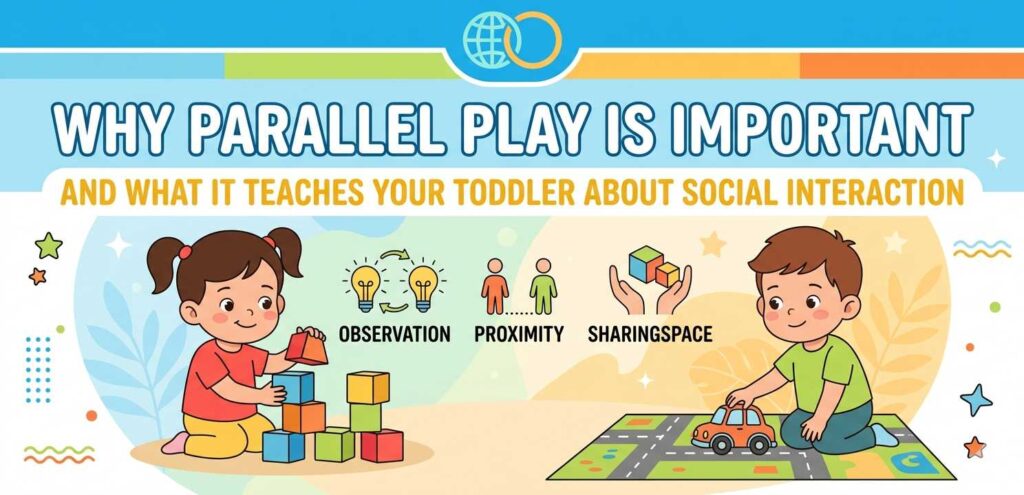
Parallel is when two or more young children play near each other but not directly with each other. They’re in the same space, doing similar or different activities, but there’s little to no interaction between them. Think of two toddlers at a sandbox — one filling a bucket, the other pouring water, neither coordinating or communicating much. That’s in its most natural form.
This stage typically begins around 18 months to 2 years old and continues well into the preschool years. It’s not a sign of shyness or social difficulty. It’s actually the brain’s way of easing into the more complex world of social connection.
Developmental psychologist Mildred Parten first described parallel in the 1930s as one of the key stages in child play development. Even today, her framework holds up well in how we understand toddler behavior.
Why Parallel Play Is Important for Brain Development
Here’s something many parents don’t realize: parallel is doing a lot of heavy lifting for your toddler’s brain, even when it looks passive from the outside.
When your child plays near others, they’re constantly observing. They notice how another child holds a crayon, stacks blocks, or reacts when a tower falls. This kind of social watching is how young children absorb information before they’re ready to act on it. It’s almost like their brain is quietly collecting data.
Research in early childhood education suggests that children who have regular parallel experiences show stronger readiness for cooperative play later on. The transition from playing alongside others to playing with others doesn’t just happen — it’s built on the foundation parallel creates.
For more on how early play stages support brain growth, you can read this helpful overview from Zero to Three.
What Parallel Play Teaches About Social Interaction
This is the part that surprises most parents. Parallel might look like isolation, but it’s actually a social activity in disguise.
Learning to Share Space
Before a toddler can share a toy, they have to get comfortable sharing a space. Parallel is how that happens. When children sit near each other without fighting over the same object, they’re practicing one of the most basic social skills — tolerating another person’s presence without feeling threatened.
That sounds simple, but it really isn’t. For a toddler, every new person is unpredictable. Parallel gives them a low-pressure way to get used to that.
Reading Social Cues Without Pressure
During children observe each other constantly. A toddler will peek at what the child next to them is doing, mimic a gesture, or adjust their own behavior based on what they see. This is the beginning of reading social cues — a skill that’ll serve them for the rest of their lives.
Unlike group play, removes the pressure of having to respond immediately. Your child can watch, process, and learn at their own pace.
Building Confidence Before Engagement
Some children jump into group interaction naturally. Others need a warm-up period. Parallel serves as that warm-up. A shy toddler who first spends time playing near others is far more likely to eventually say “can I try?” than a child who’s thrown directly into group activities without that adjustment time.
Think of it like warming up muscles before exercise. You wouldn’t sprint cold. Parallel is your child’s social warm-up.
How Parallel Play Leads to Cooperative Play
Parallel is not the destination — it’s the path. Over time, as children become more comfortable in shared spaces, they naturally begin to interact. A comment here, a shared toy there. Eventually, they’re building something together or making up a game with rules.
This progression happens at different speeds for different children, and that’s completely normal. Some toddlers move into cooperative play around age 3. Others take until 4 or even 5. There’s no finish line your child needs to reach by a specific birthday.
What matters is that they’re getting regular opportunities for Playdates, daycare settings, playgrounds, and even library storytime sessions all provide these natural environments.
According to guidance from the American Academy of Pediatrics, unstructured play time — including is essential for healthy social and emotional development in toddlers.
Signs That Your Toddler Is Thriving Through Parallel Play
Not sure if your child is benefiting? Here are a few things to look for:
They choose to play near others. Even if they’re not talking, a toddler who consistently moves toward other kids (rather than away) is engaged in healthy parallel play behavior.
They glance at other children. That quick sideways look isn’t distraction — it’s observation. Your child is learning.
They occasionally imitate. If your child picks up a similar toy or copies what the child next to them is doing, that’s parallel doing its job.
They gradually initiate small interactions. Over weeks or months, you may notice a quick “look at mine!” or a toy being silently handed over. These small moments are milestones.
How Parents Can Support Parallel Play
You don’t have to engineer anything complicated. The best thing you can do is create the right environment and then step back.
Create Shared Spaces With Multiple Toys
Set up a space with enough similar toys that two children can explore independently without having to compete for the same object. Duplicate toys reduce conflict and let children focus on playing rather than fighting.
Avoid Forcing Interaction
Don’t push your toddler to “go play with them” if they’re hanging back. Let them observe first. Forced interaction often creates resistance. Natural curiosity, given time, does a much better job.
Stay Calm When There’s No Interaction
Parents sometimes feel embarrassed at playgroups when their child sits alone. But a toddler playing quietly near others is doing exactly what they should be doing. Relax and let it unfold.
Offer Consistent Playtime With the Same Peers
Familiarity matters for toddlers. When the same children appear regularly, your toddler builds comfort more quickly. Over time, parallel between familiar children transitions into genuine friendship more naturally.
Common Misconceptions About Parallel Play
A few things parents often get wrong:
“My child isn’t making friends.” Parallel IS friendship-building — just in the early stages. The social wiring being laid down now is what makes real friendship possible later.
“They’re too old for this.” Even children as old as 5 or 6 sometimes return to parallel in new or unfamiliar settings. It’s a normal response to social novelty, not regression.
“They need intervention.” Unless your child consistently avoids all social contact, shows distress around others, or regresses sharply, parallel play is nothing to worry about. If you do have concerns, your pediatrician is the right first step — not a diagnosis you’ve googled at 11pm.
Parallel Play and Screen Time — What You Should Know
One thing worth mentioning: parallel that happens digitally (two kids watching separate videos or playing separate games side by side) doesn’t offer the same developmental benefits as physical, in-person parallel The key ingredients — reading body language, adjusting behavior based on real-time cues, sensing another person’s emotions — require an actual human in the room.
That doesn’t mean screens are evil. It just means they can’t replace real-world social environments. Balance matters.
Final Conclusion
Parallel play is one of those things that looks unremarkable until you understand what’s really happening beneath the surface. Your toddler, sitting quietly beside another child and stacking their blocks with zero conversation, is actually practicing patience, observation, emotional regulation, and the earliest foundations of friendship. Parallel play isn’t the absence of social development — it’s the beginning of it.
Give your child regular opportunities to be near other kids. Don’t rush the interaction. Trust the process. The connections will come.