
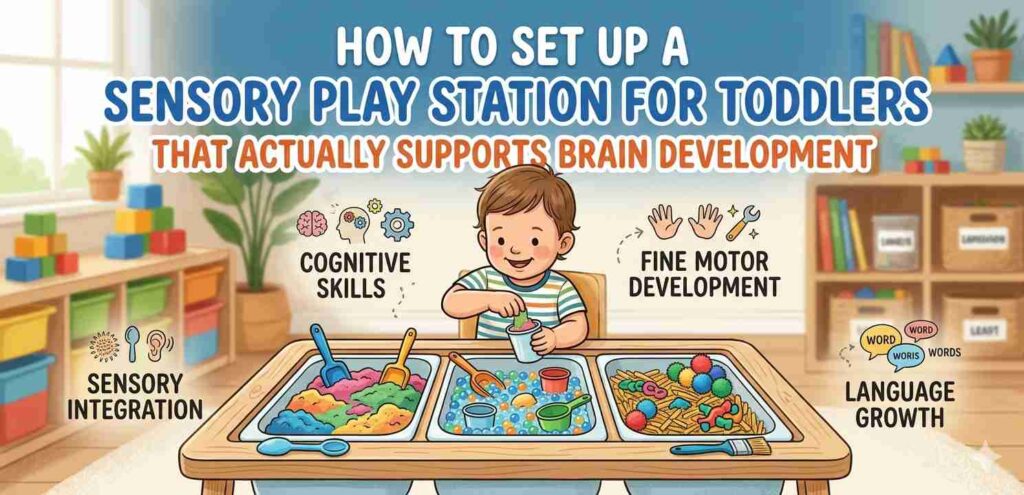

Setting up a sensory play station for toddlers might sound like something only early childhood specialists do. But honestly? Any parent or caregiver can do it at home — without spending a lot of money or having a big space.
The real question isn’t whether to set one up. It’s how to set it up in a way that actually does something useful for your child’s developing brain. That’s what this guide is about.
What Is a Sensory Play Station for Toddlers, Really?
A sensory play station for toddlers is a dedicated space — doesn’t have to be fancy — where a child can touch, smell, hear, see, and sometimes taste different materials safely. It’s not just a bin of sand or a pile of toys.
It’s intentional. The materials you choose, how you arrange them, and when you introduce new items all matter. Done right, it becomes a daily tool that builds neural pathways your toddler’s brain literally needs right now.
Toddlers are in a critical window of brain development. Between ages 1 and 3, the brain is forming connections at a pace that will never happen again. Sensory play directly feeds that process.
Why Sensory Play Matters More Than Most Parents Realize
Here’s something most parenting articles don’t say plainly: passive screen time does not do what sensory play does.
Watching a tablet stimulates vision and sound. But a sensory play station for toddlers engages the tactile system, proprioception (body awareness), motor planning, and even early language development — all at once.
When a toddler squeezes wet sand, they’re not just playing. They’re learning cause and effect, building grip strength, and developing the vocabulary to describe what “cold” and “squishy” feel like. That’s a lot happening in one small moment.
Research from early childhood development programs consistently shows that toddlers who engage in regular multi-sensory play show stronger attention spans, better fine motor skills, and earlier language emergence. You can explore more at Zero to Three, one of the most reliable resources for developmental science.
Choosing the Right Space for Your Setup
You don’t need a playroom. A kitchen corner, a section of the living room floor, or even a small table near a window works fine.
What to Look For in a Good Spot
- Easy to clean (tiles or hardwood beat carpet here)
- Good natural light if possible
- Low enough for your toddler to reach everything comfortably
- Away from high foot-traffic areas so the child isn’t constantly interrupted
A sensory play station for toddlers works best when the child can access it somewhat independently. That sense of autonomy actually matters for development — it builds confidence alongside sensory skills.
Materials That Actually Support Brain Development
This is where a lot of parents go wrong. They fill a bin with random stuff and wonder why their toddler ignores it after two minutes.
The materials in a sensory play station for toddlers should be varied in texture, safe for the age group, and rotated regularly to keep things interesting.
Tactile Materials (Touch)
- Kinetic sand or moon sand (great for hand strength)
- Water beads (use with supervision for under-3s)
- Cooked spaghetti or rice dyed with food coloring
- Shaving foam (non-toxic varieties)
- Smooth river stones mixed with soft fabric scraps
Visual Materials (Sight)
- Light tables or even a lit tablet under a clear tray
- High-contrast black and white cards
- Translucent colored blocks
- Small mirrors placed at different angles
Auditory Materials (Sound)
- Sealed containers with different materials inside (rice, bells, buttons)
- Simple wooden instruments — maracas, small drums
- Wind chimes placed low enough to touch
Smell and Taste (for supervised exploration)
- Herb pots — lavender, mint — placed nearby
- Edible sensory bins using oats, cereal, or puffed rice for younger toddlers still mouthing things
Rotate these materials every week or two. A sensory play station for toddlers that never changes stops being stimulating pretty quickly.
How to Arrange the Station for Maximum Engagement
Layout matters more than most people think. Here’s a simple approach that works.
The Three-Zone Method
Zone 1 — Exploration Zone: This is the main sensory bin or tray. Change the material weekly. This is where most of the tactile play happens.
Zone 2 — Building Zone: Add simple open-ended materials like cups, spoons, funnels, or small containers. Toddlers love to fill and dump — it’s actually a developmental milestone, not just mess.
Zone 3 — Quiet Observation Zone: A small tray with visual materials — colored water in clear bottles, a simple light panel, or even high-contrast picture cards. This zone supports focus and calm.
Keep the zones physically distinct, even if the whole setup is just one table. That structure helps toddlers understand that different areas do different things.
Age-Appropriate Adjustments You Need to Make
A sensory play station for toddlers isn’t one-size-fits-all. A 14-month-old needs different things than a 30-month-old.
12–18 Months
At this age, everything goes in the mouth. Use only edible or mouth-safe materials. Large-grain oats, plain yogurt, water, or large smooth wooden objects. Avoid anything smaller than a golf ball.
18–24 Months
Toddlers at this stage are starting to use tools. Add simple spoons, cups, and scoops. Introduce slightly more complex textures — foam, soft clay, damp soil in a sealed tray.
24–36 Months
Now you can introduce more variety. Kinetic sand, water beads with close supervision, simple puzzles, and small-world play (miniature animals in a textured landscape, for example). This is also a good time to introduce early sorting activities — by color, shape, or texture.
How Long Should Sensory Play Sessions Last?
There’s no magic number, but 20–40 minutes of uninterrupted sensory play per day is a solid target for most toddlers.
Don’t force it. If your child wanders away after 10 minutes, that’s fine. Forcing longer engagement actually backfires — it turns a positive experience into a stressful one.
The best sensory play station for toddlers is one the child returns to by choice. That self-directed return is actually the best sign it’s working.
Common Mistakes to Avoid
A few things parents do with the best intentions that end up reducing the value of sensory play:
Over-directing. Saying “no, do it this way” constantly interrupts the exploratory process. Let them do it wrong. That’s often where the learning happens.
Never changing materials. A static sensory play station for toddlers becomes background furniture fast. Novelty matters.
Setting up in an inconvenient spot. If it’s hard for you to supervise, you’ll either shut it down frequently or stop setting it up. Put it where you actually spend time.
Skipping cleanup as a learning moment. Involving your toddler in simple cleanup — scooping materials back into bins — is itself a great fine motor and sequencing activity.
Making It Work on a Tight Budget
You don’t need to buy a special sensory table or expensive kits. Here’s a realistic budget approach:
- A plastic storage bin from any home store: under ₹300–₹500
- Rice, oats, or lentils from your kitchen pantry: basically free
- Repurposed kitchen tools — spoons, cups, colanders
- Cardboard tubes and boxes for building zones
You can build a fully functional sensory play station for toddlers for well under ₹1,000 if you’re resourceful. The materials matter far less than the intentionality behind how you use them.
For more evidence-based ideas on sensory activities by age, the CDC’s developmental milestones page is genuinely useful to cross-reference with your setup.
Involving Other Caregivers in the Process
If your toddler spends time with grandparents, daycare staff, or other family members, share the basics of how the station works. Consistency helps.
You don’t need to hand anyone a manual. Just explain: let the child lead, don’t redirect unless safety is an issue, and try to observe rather than instruct.
A sensory play station for toddlers that gets used consistently across different caregivers becomes more effective over time — because repetition is how the brain actually builds those long-term connections.
Final Conclusion
Setting up a sensory play station for toddlers doesn’t require expertise, a large budget, or special equipment. What it requires is a little thought about materials, space, and how you step back and let your child explore.
The brain development benefits are real — not abstract or theoretical. Every time a toddler squeezes, pours, smells, or sorts something at their play station, they’re doing the neurological work that supports attention, language, motor skills, and emotional regulation later in life.