
If you’re a parent of a toddler, you already know how fast things can go sideways. One moment they’re playing happily, and the next — full meltdown on the kitchen floor. Setting up a calm down corner for toddlers is one of the most practical and genuinely effective tools parents and early childhood educators have found to manage these moments without making things worse.
This isn’t a punishment spot. It’s not a timeout chair. It’s a soft, inviting space where your child learns to recognize big feelings and slowly settle themselves. And yes, it actually works — if you set it up right.
What Is a Calm Down Corner for Toddlers?
A calm down corner for toddlers is a small, dedicated area in your home that’s filled with calming sensory items, simple tools, and a sense of emotional safety. The idea is that when a child feels overwhelmed, they have somewhere to go — a predictable, familiar place that helps their nervous system slow down.
Toddlers, typically between ages 1.5 and 4, don’t yet have the brain development to regulate strong emotions on their own. They need external support. A physical space designed just for this purpose can act like a signal to their brain: “this is where we calm down.”
It’s a concept rooted in early childhood development and is widely recommended by pediatric occupational therapists and educators. You can learn more about the science behind emotional co-regulation from resources like Zero to Three, which focuses specifically on early childhood development.
Why Tantrums Happen (And Why This Helps)
Before you can create a useful calm down corner for toddlers, it helps to understand what’s actually happening during a tantrum. Toddler brains are still forming the connections between emotion and logic. When something goes wrong — a broken cracker, a “no” from you, a toy taken away — their emotional brain fires up fast, and the rational side just isn’t strong enough yet to catch it.
Screaming, crying, throwing — these are all signs of emotional overwhelm, not bad behavior. That reframe matters a lot.
A calm down corner for toddlers works because it creates a routine. Over time, your child starts to associate that space with feeling better. The corner doesn’t fix tantrums overnight, but with consistent use, many parents start noticing fewer meltdowns within a few weeks.
How to Choose the Right Location
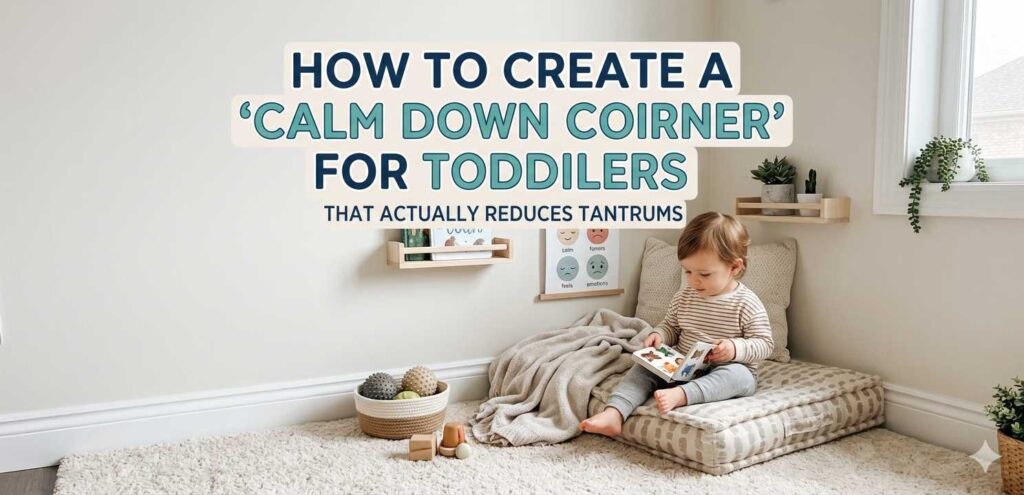
The location matters more than most parents expect. You want a spot that feels cozy and slightly enclosed, but not isolated or scary. A corner in the living room or bedroom tends to work better than a hallway or bathroom.
Look for a place that’s:
- Away from high-traffic, noisy areas
- Low to the ground so toddlers feel safe
- Easy for you to see from nearby (supervision is still important)
- Away from screens and strong visual distractions
Once you pick the spot, keep it consistent. Moving the calm down corner frequently confuses toddlers who rely heavily on routine and predictability.
What to Put in a Calm Down Corner for Toddlers
This is where parents often overthink it. The goal isn’t to create a Pinterest-perfect setup. It’s to give your child tools that actually help their body and brain shift gears.
Sensory Comfort Items
Soft textures help activate the parasympathetic nervous system — basically the “rest and relax” mode. Include things like:
- A small weighted lap pad or stuffed animal
- A soft blanket or cushion
- A simple sensory bottle (a sealed plastic bottle filled with water, glitter, and glue) that kids can shake and watch settle
These aren’t just cute — they give little hands something to do when the mind is spinning.
Breathing Visuals
Toddlers can’t follow complex breathing instructions during a meltdown, but simple visuals work surprisingly well. A laminated card with a drawing of a flower (smell it) and a candle (blow it out) is something even a 2-year-old can begin to understand with practice.
Some parents use a pinwheel in their calm down corner for toddlers — kids naturally want to blow it, which triggers slow, controlled breathing without realizing it. That’s clever design.
Emotion Cards or Feelings Chart
A simple chart showing cartoon faces — happy, sad, angry, scared — gives your toddler a way to point to what they feel. Naming emotions is a skill, and having visual prompts in the calm down corner for toddlers makes this much easier.
You don’t need to buy expensive materials. A printed sheet from home, laminated if possible, does the job perfectly well.
A Few Quiet Activity Options
One or two simple, non-stimulating activities can help toddlers transition back to calm. Think:
- A small coloring book with chunky crayons
- Playdough (stored in a small container)
- A simple puzzle with large pieces
Avoid anything with bright lights, sounds, or too many pieces. The goal is quiet engagement, not entertainment.
How to Introduce the Calm Down Corner to Your Toddler
Here’s where a lot of parents go wrong — they wait for a tantrum and then point to the corner. That almost never works. Introduce the calm down corner for toddlers during a calm, happy moment, not in the middle of a meltdown.
Sit in the corner together. Show your child each item. Name what it’s for. “This is our cozy corner. When we feel really big feelings, we come here to feel better.”
Practice using it together regularly — not just when things are bad. Role-play: “Oh no, Teddy is upset! Let’s bring him to the calm corner.” Making it a normal, even fun place removes any stigma or fear.
For more guidance on teaching toddlers emotional regulation, the CDC’s developmental milestones resources are a helpful starting point for age-appropriate expectations.
Common Mistakes Parents Make
Turning It Into a Punishment
The single biggest mistake. If a child is sent to the calm down corner for toddlers as a consequence for bad behavior, it loses all its effectiveness. They start to resist it, fear it, or associate it with shame — none of which helps with emotional regulation.
Use it proactively. Say, “I can see you’re feeling really big feelings. Let’s go to our special corner together.”
Expecting Instant Results
Most parents give up too early. The calm down corner for toddlers is a long-term investment. Expect two to four weeks of consistent use before you see real shifts. Some children take longer, especially if they’re temperamentally more intense.
Making It Too Stimulating
Bright colors, lots of toys, loud textures — these are counterproductive. The corner should feel quieter and softer than the rest of the room, not more exciting.
How to Use the Corner During an Actual Tantrum
When the meltdown is already happening, your tone matters more than your words. Don’t lecture. Don’t explain the rules of the calm down corner for toddlers mid-cry. Just gently guide them toward it.
Say something like: “Let’s go to our cozy spot.” Sit nearby — or sit in the corner with them. Young toddlers especially need co-regulation, meaning they need a calm adult nearby to help them calm down, not isolation.
Once they start to settle, you can use the tools together. Shake the glitter bottle. Do one slow breath together. Look at the feelings chart. Then, when they’re genuinely calm, that’s the time for a brief, simple conversation about what happened.
You can also look at internal resources like our guide on building emotional connection with toddlers or managing screen time during difficult moments here for additional parenting strategies that complement this approach.
Age-Specific Tips
For toddlers under 2, the corner works best as a co-regulation space — meaning you’re always in it with them. Focus mostly on sensory comfort items and calm adult presence.
For ages 2 to 3, start introducing the breathing visuals and feelings chart. Keep explanations very simple and short.
For ages 3 to 4, children can start to learn to go to the calm down corner for toddlers semi-independently, with your encouragement. They may not always choose it — that’s normal — but consistent exposure builds the habit.
Final Conclusion
Creating a calm down corner for toddlers isn’t complicated, but it does require intention and patience. It’s not a magic fix — nothing with toddlers really is. But when set up thoughtfully and introduced without pressure, it gives children a real tool for managing emotions, and it gives parents a healthier alternative to power struggles.
Start small. Pick a corner, add a soft cushion, print one feelings chart. You can build from there. The goal is a space that feels safe, familiar, and genuinely helpful — not impressive, just real.
With consistency and warmth, most families see a meaningful reduction in the intensity and frequency of tantrums over time. That’s the whole point of a calm down corner for toddlers — not perfection, just a little more peace.